
Who is Jesus, and why should you believe in Him? The Gospel of John brings those questions into focus through remarkable signs, personal conversations, and Jesus’ own statements about His identity.
John introduces Jesus as the eternal Word who became flesh. He then shows Jesus bringing light into darkness, offering life to the spiritually dead, and revealing the Father through His words and works.
This Gospel of John overview explores the book’s purpose, major themes, and signs—and offers a simple way to read all 21 chapters in one week.
Why Was the Gospel of John Written?
John explains his purpose near the end of his Gospel. In John 20:30–31, he says Jesus performed many signs that he did not include. The signs he selected serve a clear purpose:
“that you may believe that Jesus is the Christ, the Son of God” — John 20:31, ESV
John connects that belief with receiving life in Jesus’ name. His Gospel invites readers to recognize who Jesus is and trust Him personally. Read John 20:30–31 in the ESV.
Three ideas help us understand this purpose.
Jesus is the Christ. Christ means Messiah, God’s promised Anointed One. John presents Jesus as the fulfillment of God’s promises to His people.
Jesus is the Son of God. Throughout the Gospel, Jesus reveals His unique relationship with the Father. His words and works call readers to recognize His divine identity.
Life comes through believing in Jesus. John calls us to more than admiration for Jesus’ teaching. He invites us to entrust ourselves to the Savior who gives eternal life.
Keep this purpose in mind as you read. Every sign, conversation, and declaration contributes to John’s presentation of Jesus.
A Simple Outline of the Gospel of John
John’s Gospel moves from the revelation of Jesus’ identity to His public ministry, His preparation of the disciples, and His death and resurrection.
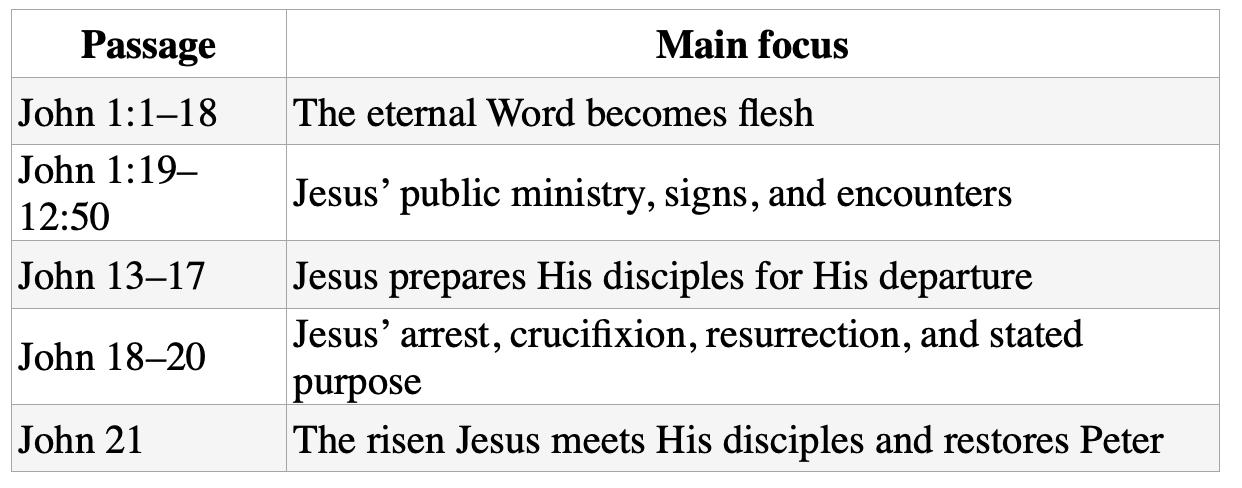
This outline helps you follow the story while noticing how each section answers the central question: Who is Jesus?
Major Themes in the Gospel of John
1. Jesus Reveals God
John begins before Bethlehem. Jesus is the eternal Word who was with God and is God (John 1:1). That Word became flesh and lived among us (John 1:14).
This opening shapes everything that follows. When Jesus teaches, heals, serves, and gives His life, He reveals the character of the Father. In John 14:9, Jesus explains that seeing Him means seeing the Father.
As you read, ask: What does this passage reveal about God through Jesus?
2. Belief and Unbelief
People respond to Jesus in different ways. Some trust Him. Others question, resist, or reject Him. Even those who witness remarkable signs do not always believe.
John helps us examine our own response. Are we approaching Jesus honestly? Are we receiving His words? Are we willing to trust Him when His teaching challenges our expectations?
The encounter with Thomas in John 20 brings this theme into sharp focus. Thomas moves from doubt to a personal confession of Jesus as his Lord and God (John 20:24–29).
3. Eternal Life
Eternal life is central to John’s message. Jesus offers life that death cannot take away, and that life begins in a relationship with God through Him.
In John 17:3, Jesus describes eternal life in terms of knowing the only true God and Jesus Christ, whom He sent.
This gives Christian hope both a future and a present dimension. Believers anticipate resurrection while learning to know and follow Jesus today.
4. Light and Darkness
John uses light and darkness to describe the contrast between God’s truth and humanity’s sin.
Jesus brings light into a world that often resists exposure. Coming to Him involves allowing His truth to reveal what we would prefer to hide (John 3:19–21).
As you read, consider where His words call for honesty, repentance, and a new direction.
5. Love and Abiding
In John 13–17, Jesus prepares His disciples for life after His departure. He teaches them to love one another, remain in Him, obey His words, and depend on the Holy Spirit.
The vine and branches picture in John 15 makes this dependence clear. A branch bears fruit because it remains connected to the vine. Likewise, fruitful discipleship grows from an ongoing relationship with Jesus.
Following Him means continuing in His love and allowing that love to shape how we treat others.
6. Jesus’ Glory Through the Cross and Resurrection
Jesus repeatedly speaks about His coming hour. As the story unfolds, that hour leads to His death and resurrection.
At the cross, Jesus willingly lays down His life in obedience to the Father (John 10:17–18). His resurrection then reveals His victory over death and stands at the heart of the disciples’ witness.
John calls us to see Jesus’ sacrificial love and saving power together.
The Seven Signs in the Gospel of John
John records miracles as signs because they reveal something about Jesus. A common way to study His public ministry is through these seven signs.
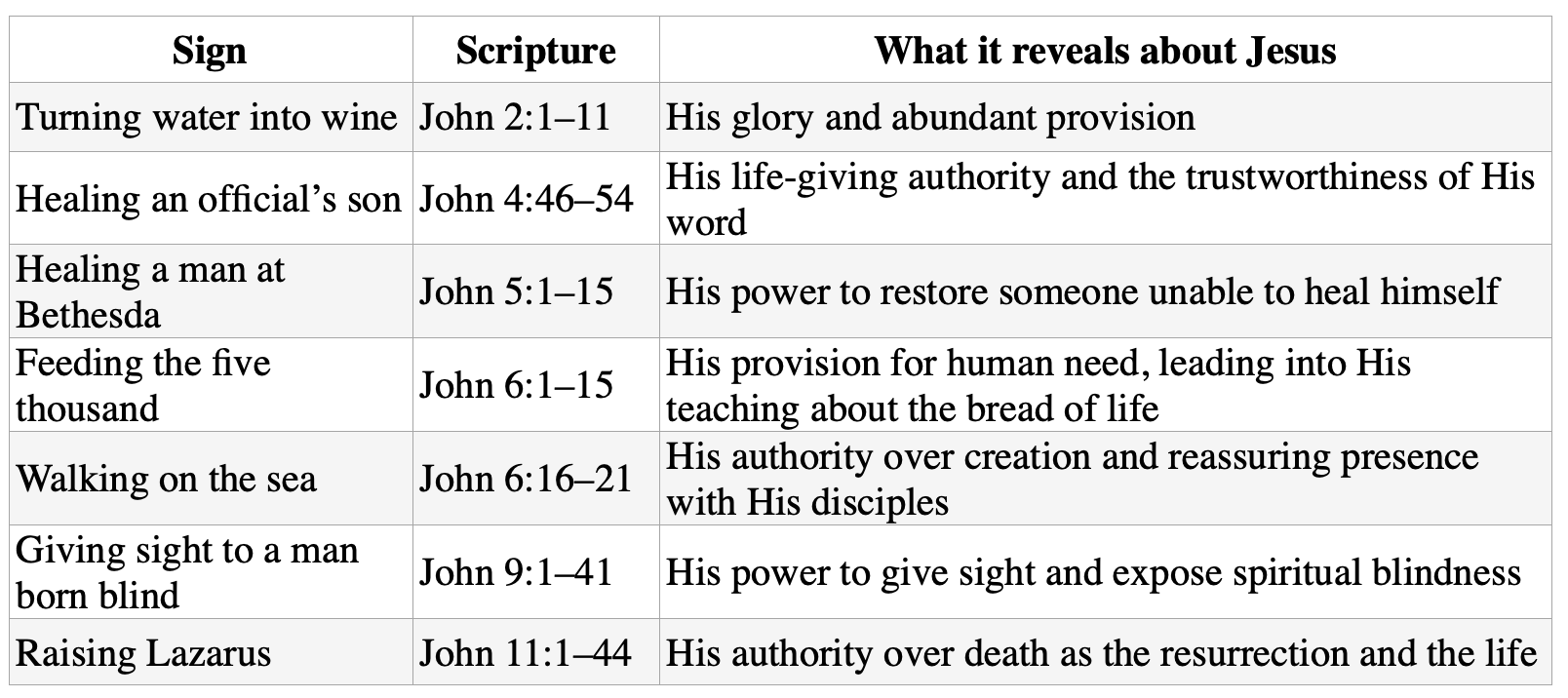
This familiar list does not include every miraculous event in the Gospel. Jesus’ resurrection is central to John’s account, and John 21 also records a miraculous catch of fish.
The signs invite us to look beyond the immediate event. When Jesus feeds a crowd, we see His compassion and are prepared to hear His teaching about the bread of life. When He raises Lazarus, we encounter the One who has authority over death.
For each sign, ask: What does this show me about Jesus, and how should I respond?
Jesus’ “I Am” Statements in John
Alongside the signs, John records seven familiar picture statements in which Jesus explains His identity and work.
The bread of life — John 6:35. Jesus gives the life and lasting satisfaction we need.
The light of the world — John 8:12. Jesus leads His followers out of darkness.
The door — John 10:7–9. Jesus provides entry into salvation and the safety of His care.
The good shepherd — John 10:11–14. Jesus knows His sheep and lays down His life for them.
The resurrection and the life — John 11:25–26. Jesus gives life that reaches beyond death.
The way, the truth, and the life — John 14:6. Jesus is the way to the Father.
The true vine — John 15:1–5. Jesus is the source of His disciples’ spiritual fruitfulness.
Read each statement within its surrounding conversation. Notice the need, question, or misunderstanding Jesus addresses. That context helps you understand the significance of His words.
Titles of Jesus to Notice as You Read
John also introduces Jesus through titles that deepen our understanding of Him:
The Word — John 1:1, 14: He is eternal, divine, and has come in the flesh.
The Lamb of God — John 1:29: He takes away the sin of the world.
The Messiah — John 1:41: He is God’s promised Anointed One.
The Son of God — John 1:49; 20:31: His identity is central to the faith John calls for.
The Savior of the world — John 4:42: His saving mission reaches beyond one nation.
Lord and God — John 20:28: Thomas recognizes the risen Jesus in a personal confession of faith.
Together, these titles show why Jesus deserves our trust, worship, and obedience.
How to Read the Gospel of John in Seven Days
John has 21 chapters. Reading three chapters each day takes you through the entire Gospel in one week.
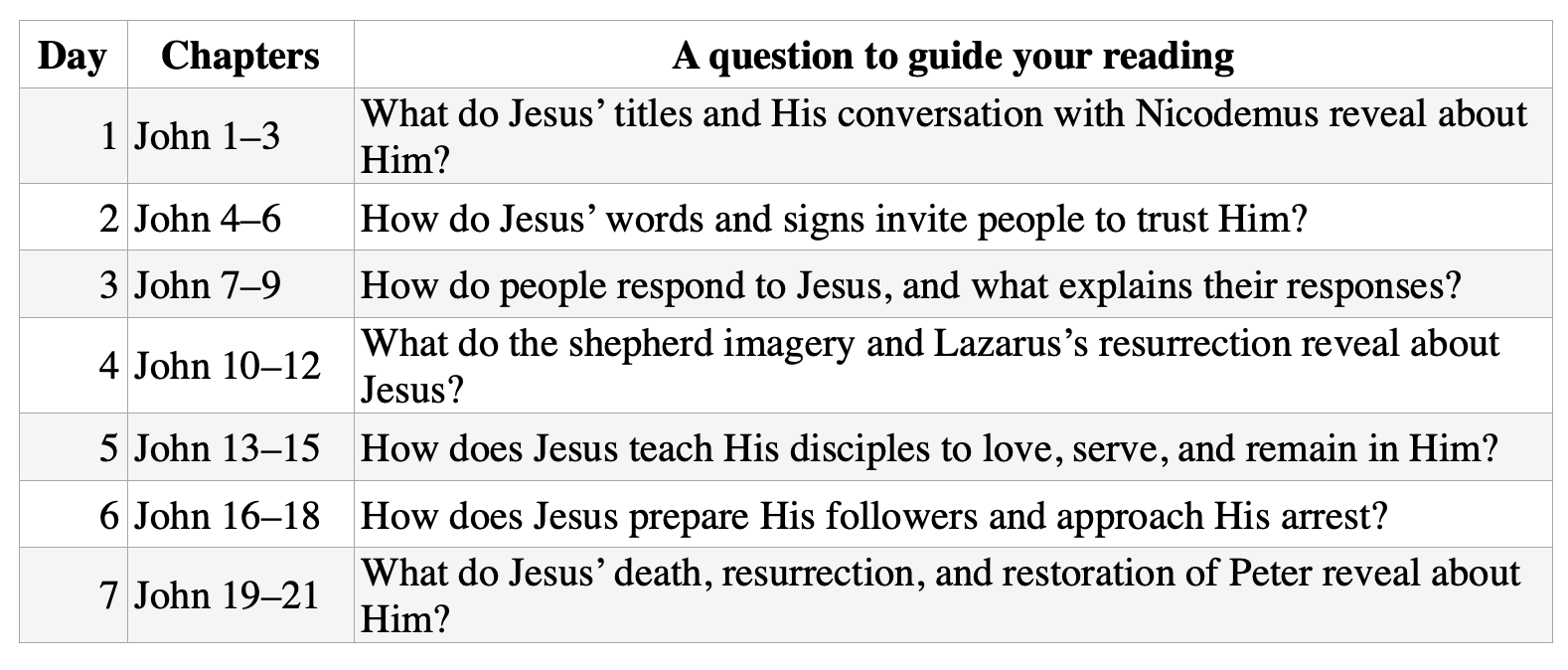
Keep a notebook nearby. For each sign, title, or significant statement, write a brief observation:
Passage → What it reveals about Jesus → My response
For example:
John 11:25–26 → Jesus has authority over death and gives eternal life → I can bring my fear of death to Him and trust His promise.
Your notes can be simple. The goal is to pay attention to Jesus and respond to what you learn.
Frequently Asked Questions About the Gospel of John
What is the main message of the Gospel of John?
John presents Jesus as the Christ, the Son of God, and invites readers to believe in Him and receive life in His name. John 20:30–31 states this purpose directly.
Why does John call Jesus’ miracles signs?
The miracles point to Jesus’ identity and authority. They invite readers to consider who He is and place their trust in Him.
Is the Gospel of John a good place to begin reading the Bible?
John provides a focused introduction to Jesus’ identity, teaching, death, and resurrection. Its stated purpose gives new readers a clear question to follow: What does this passage reveal about Jesus?
Your Next Step: Read, Notice, and Share
John wrote so that readers would believe in Jesus and receive life in His name. Let that purpose guide your next week in Scripture.
Read three chapters of John each day. Note what each sign, title, or statement reveals about Jesus, then share one insight with another person.
Begin today with John 1–3. Ask God to help you understand His Word and respond with faith. Then share one thing you learned—with a friend, family member, or someone from your church.
As you read, keep returning to the question at the heart of this Gospel: Who is Jesus, and how will I respond to Him?